How the Tor exit list is published — and how to match it correctly
The list is public and updated constantly. Here is where it comes from, how often it changes, and the mistakes to avoid when matching.
What the Tor Project publishes
Two useful artefacts:
- exit-addresses / exit-list — machine-readable lists of relays currently allowed to be exit nodes.
- Onionoo — a JSON API with relay details, including the exit flag and exit policy.
Exits change constantly: relays join, leave, and toggle their exit policy. A list fetched once at build time will be stale within hours.
How to consume it
https://check.torproject.org/torbulkexitlist
https://onionoo.torproject.org/details?flag=Exit- Download on a schedule (every few hours is enough for most uses), keep two copies, swap atomically.
- Match on the exact IP string. Do not match on prefixes: Tor exits are individual addresses, not blocks.
- Remember IPv6: some exits publish v6 addresses too.
Common mistakes
- Matching the relay list, not the exit list. All exits are relays; not all relays are exits. The relay list produces false positives.
- Treating the list as permanent. An address that exited yesterday may be a normal household today.
- Blocking the whole ASN. Tor exits live in many networks, including consumer ISPs — blocking the ASN punishes the neighbours.
What it means for a store check
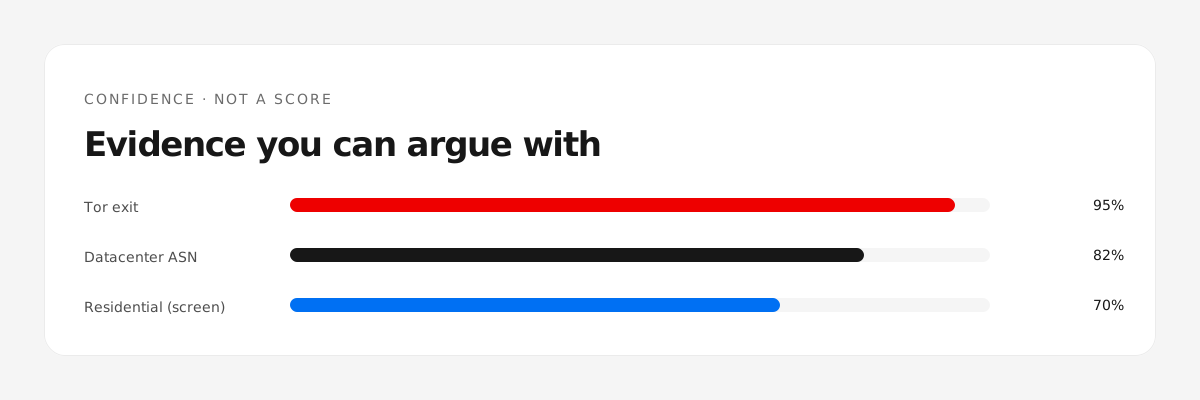
A Tor exit is a clear signal: registration from one is almost always reviewed. But the list is only a snapshot — that is why our checker labels the data source and its freshness, and why the verdict is described as a screen rather than a guarantee.
Check a batch before you buy?
Check a batch →