Static vs rotating proxy pools: which one your store actually needs
Rotation is a feature for scraping and a bug for store accounts. A short decision guide with the trade-offs.
The two products
- Rotating pool: each request (or each few minutes) leaves through a different address. Built for scraping and ad verification.
- Static pool: an address is assigned to you and stays yours for weeks or months. Built for accounts.
Why stores need static
A store account is a history: logins, payments, listings, messages. Platforms compare the current session with that history. If the exit address changes every day, the history is meaningless and the account looks operated by a pool.
Registration plus first month is the phase where stability matters most. After that, a planned migration is still risky but less so.
The trade-offs
| | Static | Rotating |
|---|---|---|
| Store registration | good | bad |
| Long admin sessions | good | bad |
| Scraping | slow, may get blocked | good |
| Cost | higher per IP | lower per request |
| Failure mode | one address burns for you | the whole pool is shared |
What to verify before buying "static"
- Is it really dedicated? Ask how many customers share the address.
- Does it change after a while? "Static" sometimes means "stable for 24 hours".
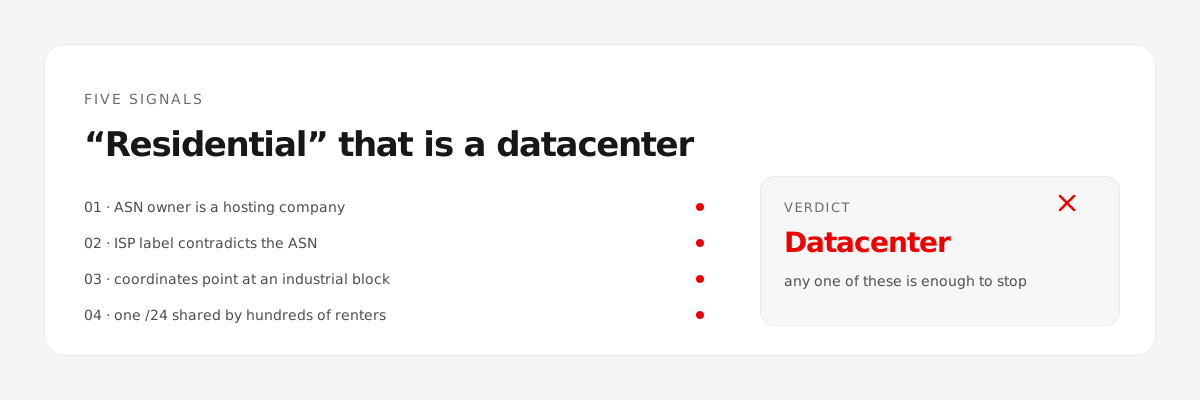
- What is the ASN? Static hosting is still hosting.
- What happens after a flag? The replacement policy is the real product.
The blind spot
A dedicated static residential address is the best case for a store — and the easiest to link accounts with, because only your accounts ever use it. Isolate browser profiles and payment instruments accordingly.