Residential vs mobile proxies: the trade-off nobody explains honestly
Mobile proxies cost more and rotate more. Here is when they help a store — and when they are just an expensive version of the same risk.
The difference is the network
A residential proxy exits from a consumer fixed-line connection (cable, fibre, DSL). A mobile proxy exits from a cellular carrier, usually behind CGNAT, so many subscribers share one public address.
That single difference explains everything else:
- Mobile addresses are shared. One address can represent thousands of people, so abuse history is noisy in both directions.
- Mobile addresses rotate naturally. Carriers reassign; sessions move between towers. A "static mobile" product exists but is rarer.
- Mobile is more expensive per GB because cellular traffic costs the provider.
When mobile actually helps
- The platform's own app usage pattern is mobile-first (short-video, social).
- You need an address that is definitely not a datacenter and not a known proxy ASN.
- Short sessions where address stability does not matter.
When mobile is the wrong tool
- Store registration. You want a stable address that stays with the account for weeks. Mobile usually does the opposite.
- Long-lived admin sessions. Rotation during a session is a red flag, not a feature.
- When the pool is a resold datacenter anyway. Check the ASN: some "mobile" pools exit through hosting ranges.
The practical check
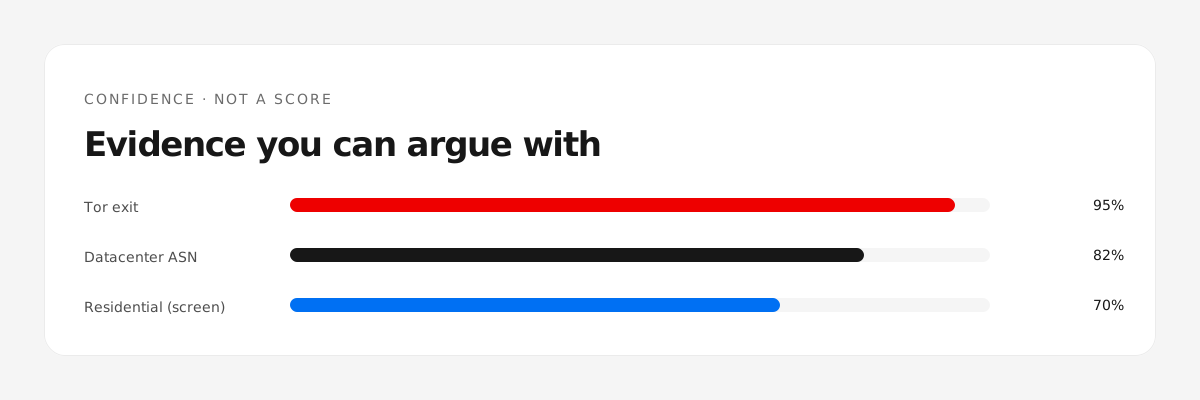
Whatever the label, verify three things: the announcing ASN type, whether the address is on the Tor or DROP lists, and whether it changes during your session. Our checker shows the first two; the watchlist shows the last one over time.
Check a batch before you buy?
Check a batch →